
Craniosacral Therapy for PTSD: When the Body Leads the Healing
What if healing trauma isn’t about forcing release — but trusting the body’s timing?
For years, trauma healing has been framed as something we must push through — talk through, analyse, relive, and process through. But post-traumatic stress disorder doesn’t live in logic alone. It lives in the nervous system, in the tissues, in the places where words never reached.
And the body?
The body does not respond well to force.
This understanding didn’t come from theory alone — it came from my own lived experience of healing from post-traumatic stress disorder.
PTSD Lives in the Nervous System
PTSD is not simply a disorder of memory. It is a disruption of the nervous system’s ability to return to safety.
Even when the mind knows the danger has passed, the body may still be bracing, guarding, and scanning for threat. Trauma is not just remembered — it is stored.
This is why approaches that work directly with the nervous system can feel so supportive — especially when talking alone hasn’t been enough.
What Is Craniosacral Therapy?
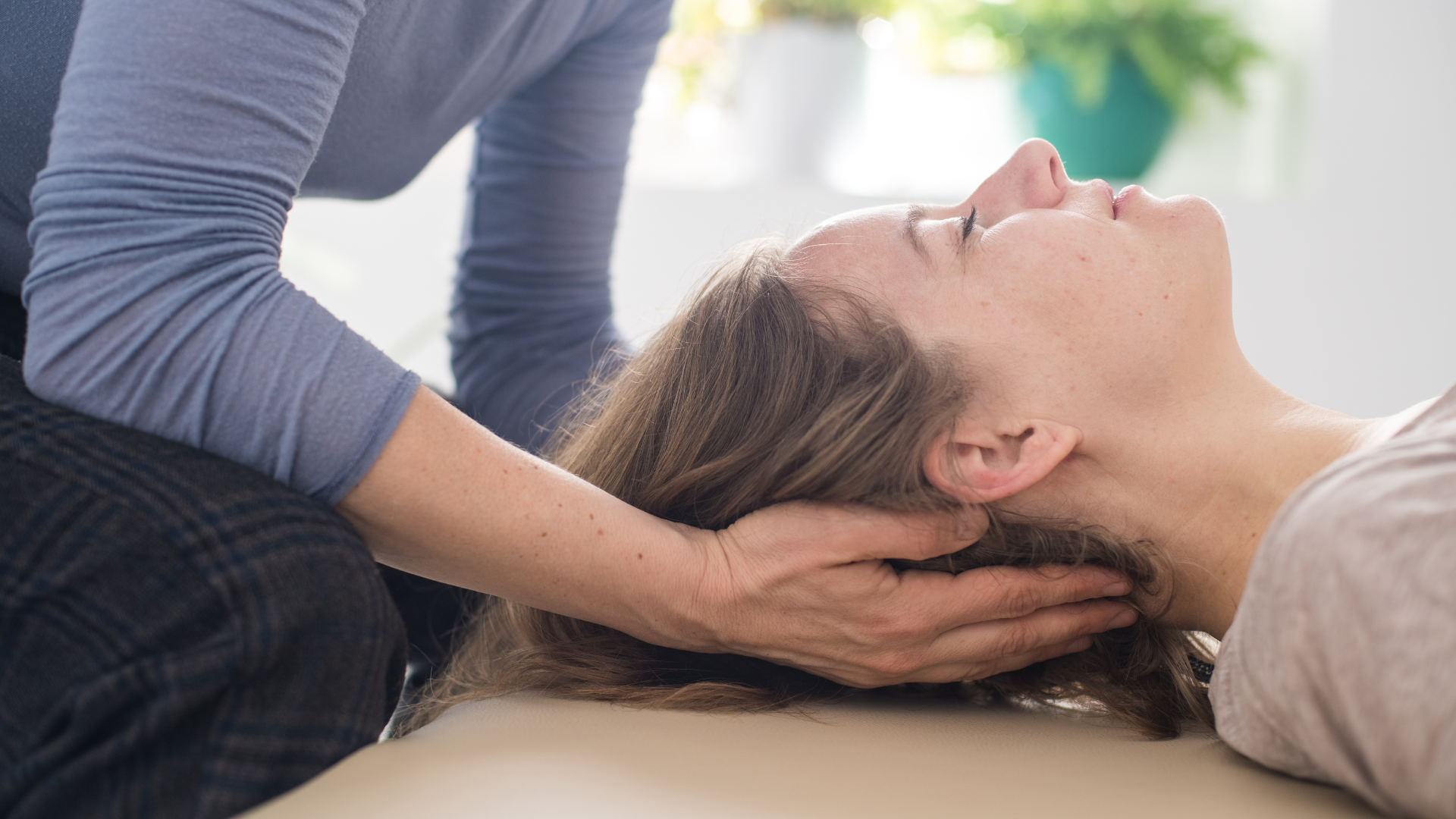
Craniosacral therapy (CST) is a gentle, hands-on somatic modality that works directly with the central nervous system by supporting the craniosacral system — the membranes and cerebrospinal fluid surrounding the brain and spinal cord.
Using extremely light, attuned touch, CST listens to subtle rhythms in the body and supports the release of restriction and stored stress — without forcing emotional processing or retraumatization.
Rather than pushing for catharsis, craniosacral therapy works in partnership with the body’s innate intelligence.
It supports the nervous system in releasing:
Emotions
Stored energy
Survival responses
Traumatic imprints
only when the body has the capacity to do so — and always in layers.
Healing Happens in Layers, Not All at Once
Healing trauma is not like ripping off a bandage.
It’s more like slowly thawing frozen ground.
If the thaw happens too quickly, the soil floods and collapses.
But when warmth is introduced gradually, the earth softens, layer by layer, and becomes fertile again.
The body works the same way.
Craniosacral therapy supports this gradual thaw — allowing the nervous system to release only what it is ready to integrate, then settle, recalibrate, and build more safety before the next layer becomes available.
As I often share from my own healing journey:
“The body doesn’t release trauma all at once — it releases in layers, as safety and capacity grow.”
This layering isn’t a delay in healing.
It is the healing.
Why We Cannot Force the Body to Release Trauma
If the body were to release everything at once, it would overwhelm the nervous system and potentially recreate the very survival responses we’re trying to heal.
The body holds trauma for a reason: protection.
Craniosacral therapy honours this intelligence by working gently, slowly, and respectfully — allowing release to unfold in a way that feels safe, regulated, and sustainable.
This is the kind of work I offer when someone’s system has been carrying too much for too long.
Craniosacral Therapy and the Parasympathetic Nervous System
Craniosacral therapy helps guide the body out of survival mode and into the parasympathetic nervous system — often called rest and restore.
This is the state where:
Muscles soften
Breath deepens
The mind quiets
The body can finally repair and integrate
For many people living with PTSD, this state can feel unfamiliar.
CST doesn’t force relaxation.
It creates the conditions for safety.
One client, Nita Z, shared after her session:
“Wow, I have never felt more relaxed in my life.”
For trauma survivors, that level of relaxation isn’t indulgent — it’s reparative.
What the Research Shows
Research is beginning to confirm what trauma-informed practitioners have long understood: supporting the body is essential for effective trauma therapy.
A key study titled “Combining Psychotherapy with Craniosacral Therapy for Severely Traumatized Patients,” published through the International Association of Healthcare Practitioners (IAHP), explored the impact of integrating Craniosacral Therapy (CST) alongside psychotherapy for individuals living with severe trauma and PTSD.
Rather than positioning CST as a standalone treatment, the study emphasized its role as a somatic support to psychotherapy — particularly for clients whose nervous systems were too overwhelmed to tolerate verbal processing alone.
Key Findings
When Craniosacral Therapy was paired with psychotherapy, participants experienced:
Reduced physical symptoms such as chronic tension, pain, and nervous system hyperarousal
Increased emotional tolerance, allowing clients to remain present without becoming flooded or dissociated
Greater nervous system regulation, supporting deeper and more effective therapeutic work
Improved capacity for self-care and embodiment
By easing physical stress and calming the nervous system, CST helped create the internal conditions needed for meaningful emotional healing to occur within psychotherapy.
Why Integration Matters
The study also emphasized the importance of collaboration with trained psychotherapists to ensure safety and integration — especially when working with severe trauma.
This mirrors how I work.
As a trained psychotherapist, I offer Craniosacral Therapy with a strong clinical foundation, ensuring that any emotional or psychological material that emerges can be safely supported and integrated.
This research reinforces a core truth of trauma healing:
When the body feels safe enough, the psyche can go deeper — and healing becomes both gentler and more effective.
Full study available here.
My Healing Journey: Integration, Not Force
In my own healing journey, craniosacral therapy was never used in isolation.
I sought CST alongside somatic breathwork, somatic psychotherapy, and trauma integration practices. Craniosacral therapy helped my nervous system settle enough to integrate the work I was doing elsewhere.
Nothing released all at once — and that was a relief.
Each session felt like my body letting go of just enough.
Then rest.
Why I Offer Craniosacral Therapy Today
I offer craniosacral therapy because I have felt what happens when the body is finally met with reverence instead of demand.
This work found me not as a technique, but as a remembering — a return to the quiet places where healing begins before words, before effort, before force. In those spaces, the nervous system softens, breath deepens, and something long held begins to loosen, not because it is told to, but because it feels safe enough to do so.
Craniosacral therapy is not about fixing what was broken. It is about honouring what endured. When the body is listened to with presence, attunement, and care, healing becomes inevitable — not rushed, not dramatic, but deeply true.
This is why I offer this work: as a sacred, steady container where the body is trusted to lead, releasing in layers, guided by its own wild and ancient intelligence.
When the Body Knows
Healing PTSD isn’t about forcing release — it’s about remembering safety.
If you’ve read this far, it’s likely not just your mind that’s been listening. Something deeper has been tracking these words — a quiet recognition, a subtle softening, a sense of yes without needing to explain why.
That’s the body.
The nervous system knows when it’s encountered a path that honours its intelligence, its pacing, its need for safety. Craniosacral therapy doesn’t ask your body to perform or prove anything. It meets you where you are — and listens.
This work is offered as a steady, grounded container where your system can begin to unwind, layer by layer, in its own time. Not because it’s being directed — but because it finally feels supported enough to do so.
If your body has been guiding you here, craniosacral therapy sessions are available as a next step in that listening. This work is held with reverence for the body’s wisdom and deep respect for the nervous system.
✨ Learn more or book a craniosacral therapy session here.
Your body already knows the way 🤍
If you’d like to deepen your understanding of Craniosacral Therapy and its gentle, body-led intelligence, you’re welcome to explore this companion piece:
The Quiet Medicine: When Gentle Touch Awakens the Body’s Wild Intelligence